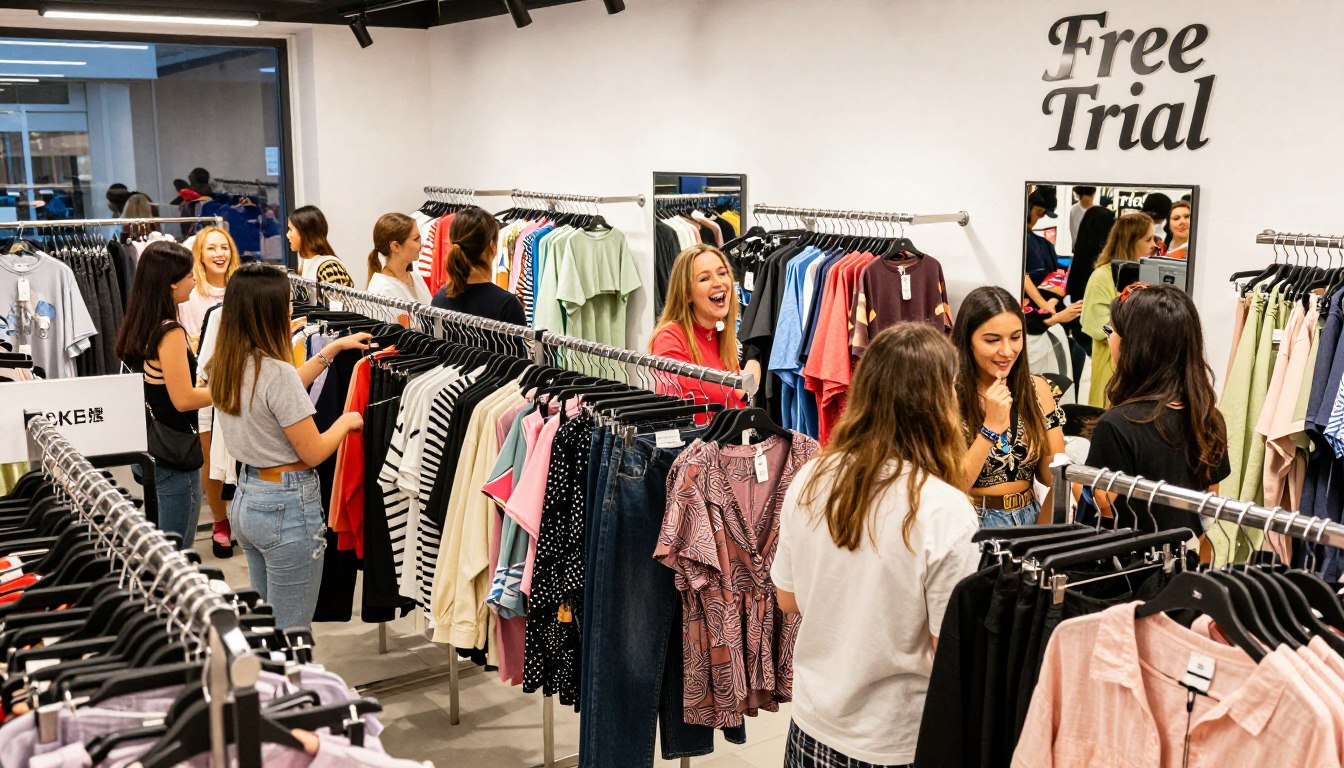
Shein has become a huge name in fast fashion, mixing affordable clothes with quick changes in style. It has a smart system that looks at what people like online, what sells, and what’s trending to decide what to make and sell. This story will dive into the Shein AI algorithm and how it predicts fashion trends for shoppers.
In this article, we speak to readers in the U.S.—whether you’re into retail tech, fashion, sustainability, or just curious. We’ll explain how Shein uses tech to go from an idea to a ready-to-sell product super quickly. We’re talking about how they use data, artificial intelligence, and smart business moves to do it.
Anúncios
We aim to make things super clear. You’ll see real examples based on studies of tech in fashion like computer seeing, understanding language, and analyzing retail data. We’ll also discuss why predicting fashion trends is key for things like getting products to market fast, saving money, and the environmental discussions it starts.
Key Takeaways
- Shein uses lots of data and smart analytics to create and stock items fast.
- The Shein AI algorithm looks at sales, social trends, and pictures to predict what’s next.
- While fast fashion AI makes things happen faster, it also brings up talk about waste and being green.
- Machine learning and teams of people work together to pick up on trends and show them to shoppers online.
- The article will cover where the data comes from, how AI is used, the ethical considerations, and examples from the real world.
Overview of Shein’s AI Algorithm and Its Role in Fast Fashion
Shein’s business strategy uses a quick loop of data, design, and production. It analyzes social media, website activity, and sales to identify new trends. This information quickly leads to automated design and quick making of new items.
Anúncios
What the algorithm does for design, sourcing, and inventory
The AI helps create fast design sketches and details based on current trends. It ranks items by their expected demand, helping choose what to make next.
This system matches what customers want with how fast suppliers can make it. It picks factories that work quickly and plans how many items to make.
For inventory, the AI forecasts and suggests when to make more or less of an item. It helps keep the right amount of stock to meet demand without having too much.
Why AI matters for fast-fashion business models
AI takes away the guessing in fashion cycles by using data for decisions. This lets brands quickly turn popular online trends into available clothes.
This approach reduces the chance of needing big sales to clear out stock. It allows for many little tests to see what works best in different areas.
Impact on speed-to-market and cost efficiency
Using AI makes it faster to get new trends into the market. This means brands can take advantage of trends quickly, without missing out.
It helps save money by making fewer mistakes with inventory and marketing. Testing with partners and using data means less waste and more smart choices.
Data Sources Powering Trend Predictions
Shein’s forecasting engine uses many data streams to identify quick trends. It mixes short-term changes with long-lasting ones to find a good balance. Inputs are adjusted based on newness, location, and who the customers are.
Internal data: sales, browsing, and customer feedback
Store and online sales tell us what people really want. Looking at which products people view and add to their cart shows us hot items early on.
Tracking returns, favorite colors, sizes, and what people search for helps us see detailed trends. This info reveals tiny trends and the different stages of product popularity.
Studying where users click and how long they stay on our site points out appealing styles. Signals from what users like guide our suggestions, making popular items more visible.
Examining reviews and what people say gives insights on fit, quality, and style. Analyzing customer comments helps our designers and planners spot what people enjoy wearing.
External data: social media, street style, and influencers
Social networks like Instagram and TikTok show what’s trending in fashion now. Watching hashtags and viral videos helps us see which styles are getting attention.
Influencers create trends quickly. Monitoring their posts and how people engage with them lets us gauge their impact.
Photos from the streets and fashion events show us what people wear in the real world. Celebrity outfits often start small trends that stores quickly bring to their customers.
Third-party feeds and syndicated trend reports
Data from retail analytics and research firms enrich our own insights. Tools from companies like Edited and Stylight confirm our hunches with broad market data.
Economic trends and industry reports help us adjust for season changes and market movements. They’re especially useful when we need more data in slow times.
We balance outside info with what we observe on our site to avoid errors. This method gives us a deep understanding that mixes quick trends with lasting changes.
- Recency: short windows highlight rapid virality.
- Geography: local tastes affect assortment decisions.
- Demographics: age and size segments tune production runs.
Machine Learning Techniques Behind Trend Forecasting
Shein uses a mix of machine learning methods to predict fashion trends. They look at sales, user photos, and social media to find out what designs might sell well. Their goal is to catch short-lived trends and longer-term demands.
Supervised and unsupervised learning applications
Supervised learning helps predict how well items will sell based on past data. It uses classification to pick winners and regression models for pricing and revenue. Retailers rely on these insights to decide on their initial stock and when to lower prices.
Unsupervised learning spots new fashion trends without needing examples. It groups similar products and customer preferences together, and quickly identifies viral trends.
Natural language processing for sentiment and trend signals
Natural Language Processing (NLP) analyzes texts for feelings and trends in fashion. It finds popular terms and tracks brand and fabric mentions. This info helps designers create trendy items.
It also spots related terms that indicate trends, enriching product designs with text and image data.
Computer vision for image-based style recognition
Computer vision identifies fashion elements in photos using advanced networks. It helps match user inspiration to actual products, balancing supply and demand.
It spots repeating styles in street fashion and catalogs, guiding designers on details. This helps make clothes manufacturable.
Multimodal models blend data from different sources to predict sales trends better. They use tests and updates to improve accuracy and stay current with tastes.
Ethics, Sustainability, and Criticisms of Algorithmic Fashion
Algorithms influence how we decide on styles, manage stock, and promote products. This power leads to serious questions about the impact on sustainable fashion. We need to think about the environment, worker conditions, and fairness when tech dictates fashion trends.
Concerns about overproduction and waste
Fast fashion cycles lead to making too much, too quickly. This results in more unwanted clothing, which increases waste and strains landfills. It’s a big problem.
The shipping and packaging needed for worldwide deliveries also bump up harmful gas emissions. Brands like Zara and H&M are criticized for their approach, which doesn’t align with eco-friendly practices.
Economic and labor considerations
Cutting costs and speeding up production puts pressure on factories. This leads to unsafe working conditions and unfair pay, especially in countries like Bangladesh, Vietnam, and India.
It’s important for buyers to think about how using robots and computers affects workers. They must ensure savings don’t come at the expense of fair treatment.
Intellectual property and design copying debates
Accusations of copying designs raise issues about ownership and creativity in fashion. Technology that scans and matches images can make it hard to tell if something is original or copied.
Both independent creators and big names in fashion accuse fast-fashion sites of copying their designs. As the law tries to catch up, the debate over technology’s role continues.
Bias, diversity, and representation in recommendation systems
Recommendation systems might be unfair if not trained on diverse data. This could ignore non-Western styles, diverse body shapes, and unique tastes. It limits choice and diversity.
Stores need to work on making their recommendations fairer. Using varied data, offering different products, and having people check their work can help include everyone.
Accountability, transparency, and paths forward
There’s a growing call for clear explanations of how these tech models work. Laws in places like the U.S. and EU are starting to focus on making technology more transparent.
Groups and brands are fighting for higher standards. They want technology to help fashion become more sustainable and ethical, without squashing innovation.
- Audit model outputs for bias and diversity gaps.
- Track lifecycle emissions to address overproduction fast fashion.
- Clarify IP in fashion rules for algorithm-assisted design.
- Build supplier safeguards to protect labor rights.
Case Studies: How Predictions Translate to Design and Sales
Shein’s real-world examples show trend signals turning into products quickly. A popular hashtag or TikTok video can start a small production run. If customers like it early on, larger production happens. This fast process lets teams learn and act quickly.
Viral fashion examples often kick off with a post from a micro-influencer. This increases search and browsing online. Merchandisers use these trends to launch quick sales or limited items. This way, brands can test demand with little risk.
Algorithms help figure out what trends in different places for targeted retail strategies. The data highlights local preferences in style and modesty. Teams then tailor their products and ads to fit local tastes better.
Localization also means using local influencer trends to decide what to sell. For example, a hot item in Mexico City might be shown differently than in Chicago. This makes items more appealing and helps shoppers find them faster.
Success measurement is based on specific goals like conversion rates and sales targets. Key performance indicators (KPIs) include increased conversion rates, how fast items sell, re-order times, how much people buy, and return rates. These metrics decide if a product gets made on a larger scale.
Tactics for selling based on data include quick A/B tests on websites and special emails. Using flash sales and influencers helps highlight trends. These methods also give clear data on sales performance.
Operational teams emphasize the importance of keeping a balance between moving fast and maintaining quality. Working well across different departments helps ensure products scale up smoothly and avoids excess stock.
Shein’s AI Algorithm: How It Predicts Global Fashion Trends
Shein uses fast data and human insight to spot and shape trends. It explains how they transform data into fashion items that are ready for sale. It also shows how their teams keep everything accurate and up to date.
Step-by-step flow from data ingestion to product launch
- Data ingestion retail starts with tracking sales, browsing, and returns data plus trends from social media.
- Preprocessing makes data clean and organized. It ensures images, text, and times match up for analysis.
- Feature engineering develops special features like season trends, popularity speed, and style similarities for models.
- Modeling uses complex methods to predict demand for each product, guiding which samples to produce.
- Decisioning makes final choices about which items to launch broadly or in limited numbers.
- Production sets up suppliers and factory schedules to match Shein’s quick turnaround times for product launches.
- Post-launch monitoring keeps an eye on sales and decides when to restock or drop products.
How the algorithm adapts to changing consumer behavior
- Adaptive algorithms update continuously with new sales and interaction data.
- Real-time updates prioritize trends like viral videos to respond to sudden interest spikes.
- Concept drift detection identifies when customer preferences change, updating models to stay relevant.
- Feedback loops use sales results to improve future forecasts.
Role of human teams alongside automated systems
- Design and buying teams turn model suggestions into product selections, considering style and brand alignment.
- Quality and compliance teams make sure samples meet standards and don’t infringe on copyright laws.
- Marketing creates stories for products identified by data to target the right customers.
- Checks like sample approvals and ethical considerations ensure a balance between quick decisions and responsibility.
Combining humans and AI in retail means quick decisions are made with understanding and caution. This approach balances fast trend adaptation with maintaining quality and judgment.
Conclusion
Shein and similar fast-fashion brands use a mix of sales data, social listening, and technology to predict trends early. This combination and the use of algorithms help speed up design processes. It also improves stock management and helps with being quick to market and saving costs. These are key to the future of fashion tech.
However, these benefits have their drawbacks. Issues include overproduction, copying designs, and unclear supply chain practices. These need more strict rules and openness to solve. Yet, when used right, these tech tools can aid in making fashion more sustainable. This includes using better materials, making products last longer, and adopting recycling.
For those in the industry, it’s important to focus on strong data management, clear rules, and involving people in oversight. For shoppers, understanding how Shein uses trends can show why buying carefully is important. Predictive tech is influential. But, its ultimate worth comes from managing it in a way that considers business success, people, and the planet equally.
Content created with the help of Artificial Intelligence.